*Abbey Road Studios*
The Beatles’ Abbey Road is more than just a classic rock album—it’s a cultural landmark. Released in 1969, it marks the last time all four members recorded together in a studio, even though Let It Be would come out later. With its seamless 16-minute medley, iconic zebra crossing album cover, and stunning production at Abbey Road Studios, the Abbey Road album is often considered one of the greatest albums of all time. In this article, we’ll explore what makes this album by The Beatles timeless, how it was created, and why it remains relevant today.
There’s a reason Abbey Road tops countless “best of” lists. Not only does it feature chart-toppers like “Come Together” and “Here Comes the Sun,” but it also showcases the Beatles at the peak of their artistic collaboration. The album strikes a balance between tight pop structure and experimental flair, and its musical complexity was groundbreaking for its time.
The 16-minute medley on side two, sometimes referred to as the “b-side medley,” stitches together multiple short songs into one of the most captivating musical journeys in rock. Critics have praised this medley for its emotional arc, orchestral transitions, and the haunting final track, “The End.” Many fans see Abbey Road as the last album where the Fab Four felt like a unified rock band, blending their individual voices into something greater than the sum of its parts.
The album was released on September 26, 1969, a year marked by political upheaval, the moon landings, and the countercultural revolution. While most Beatles fans assumed the band would go on forever, behind the scenes, John Lennon, Paul McCartney, George Harrison, and Ringo Starr were drifting apart.
Despite the tension, Abbey Road is the perfect example of how talented collaboration can thrive under pressure. Many fans didn’t know it would be the last time all four Beatles worked together. The recording began in April 1969 and wrapped in August 1969, just as the band’s internal struggles reached a peak.
Located in north-west London, Abbey Road Studios had become a second home for the Beatles since their early days. For Abbey Road, they pushed the limits of analog recording technology, thanks in part to producer George Martin and engineer Geoff Emerick.
The studio’s new transistor mixing desk, known as the TG console, enabled clearer and more vibrant recordings. It included individual limiters and compressors, as well as compressors on each audio channel, a significant step forward from earlier sessions. The TG desk used to record the album created a sound that felt exactly like a live performance. These tools helped songs like “I Want You (She’s So Heavy)” and “Something” sound richer and more cinematic than ever before.
The cover photo of the Abbey Road album is one of the most famous in music history. Shot by photographer Iain Macmillan during a quick photo session outside the studio, it features the Beatles walking across a famous zebra crossing. This cover image—with no album title or band name—became an icon in its own right.
The minimalist design made a bold statement: The Beatles are still the biggest band in the world, even without flashy packaging. Fans later obsessed over supposed clues hidden in the image, fueling the bizarre “Paul is dead” conspiracy. But at its heart, the photo captured a fleeting moment in time, right before the band split for good.
The Abbey Road zebra crossing, now a Grade II listed site, has become a pilgrimage spot for Beatles fans from around the globe. Its cultural importance can’t be overstated—it was made famous by The Beatles, but it also symbolizes a shared history between music, place, and people.
The actual zebra crossing is just steps from Abbey Road Studios. Visitors often reenact the photograph on the cover, trying to walk in the same stride as John, Paul, George, and Ringo. The crossing reflects how physical space can become part of music history, linking real-world locations to the emotions fans feel when they hear the album Abbey Road.
The medley on side two is perhaps the Beatles’ most ambitious composition. Starting with “You Never Give Me Your Money” and ending with “The End,” it blends short songs into a continuous stream that builds emotional momentum.
This was no accident. The Beatles wanted side 2 to sound exactly like a live performance, with overlapping motifs, reprises, and lyrical callbacks. The TG console also allowed smooth transitions, giving the medley its seamless feel. It’s often cited in studies of popular music as an early example of what would later be called a concept album.
Here Comes the Sun is one of the most beloved Beatles songs, written by George Harrison during a period of creative awakening. Frustrated by band politics, George found solace in nature and wrote the track in Eric Clapton’s garden with an acoustic guitar.
The song’s gentle optimism and melodic brightness made it an instant favorite. It also marked Harrison’s growth from the “quiet Beatle” to a fully realized songwriter. Critics often call it the best song on the album—and many argue it was the true start of his post-Beatles legacy.
*The Rolling Stones*
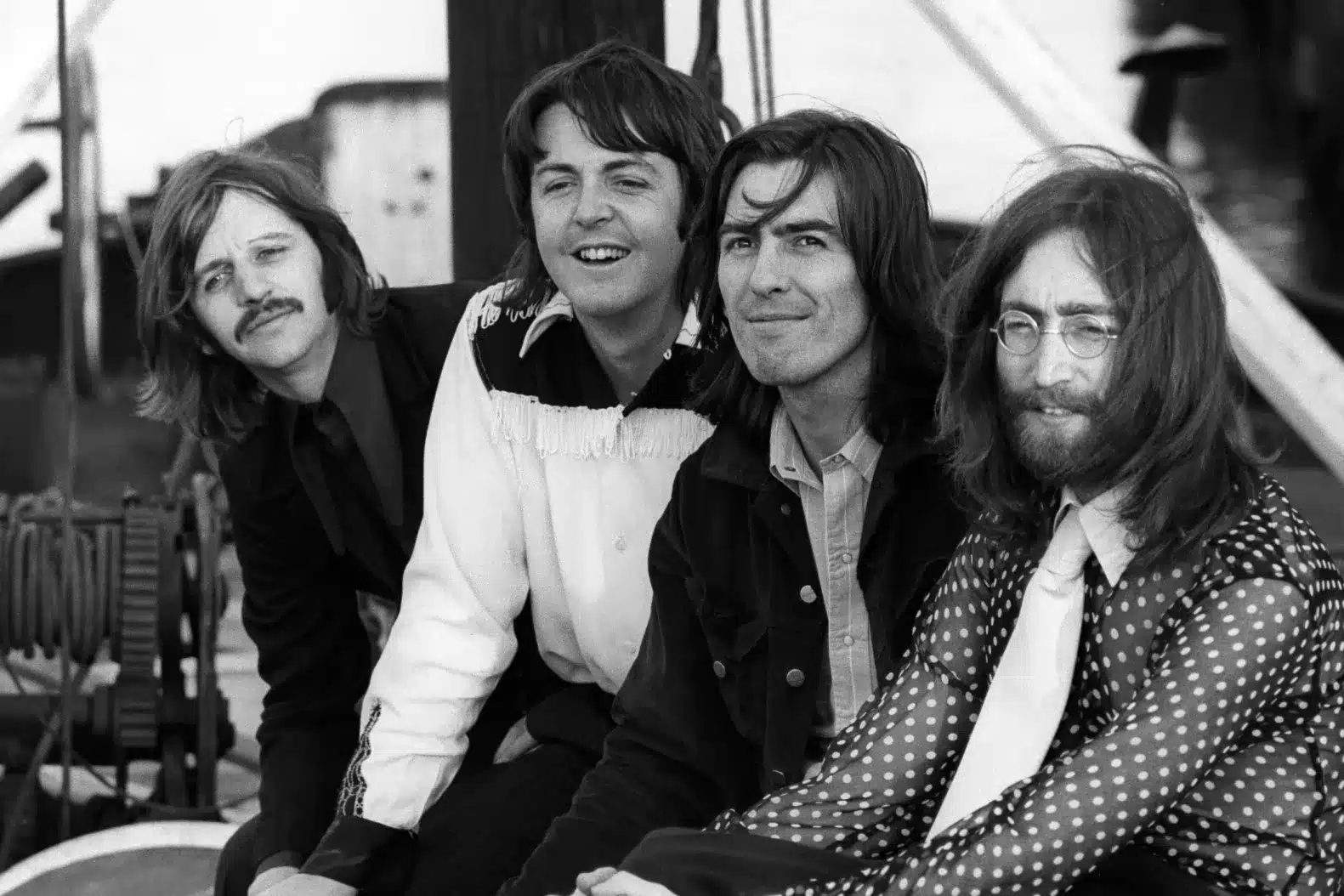
By 1969, tensions were running high. John Lennon and Yoko Ono were inseparable, and Paul McCartney had become the band’s de facto leader. Ringo, always the mediator, often found himself caught in the middle. Still, moments of camaraderie shine through on Abbey Road.
Songs like “The Ballad of John and Yoko” and “Maxwell’s Silver Hammer” show each member’s individual style. The interplay between John and Paul, though strained, remained magical. Even the closing drum solo by Ringo Starr on “The End” was the first—and last—of its kind. Despite the conflict, Abbey Road proved that the Fab Four could still deliver greatness when united by music.
Producer George Martin, often referred to as the “Fifth Beatle,” played a pivotal role in shaping the sound of Abbey Road. His classical background helped shape the orchestration and transitions throughout the album.
The studio’s cutting-edge gear—such as the transistor mixing desk and newly installed eight-track recorders—enabled the Beatles to explore layered textures and dynamic range. Martin’s production made songs like “Golden Slumbers” and “Carry That Weight” feel cinematic, wrapping up the band’s legacy with grandeur.
Decades later, Abbey Road remains at the top of streaming charts and vinyl sales. The deluxe version of the album on Apple Music brought remastered clarity and bonus tracks to a new generation. Whether you’re a longtime fan or someone discovering the Beatles for the first time, Abbey Road is the perfect entry point into their universe.
From its release history to its groundbreaking sound, the 1969 version of Abbey Road helped redefine what an album by The Beatles could be. It’s a testament to the power of music to capture emotion, place, and the spirit of a generation.
1. Why is Abbey Road considered the last Beatles album?
Although “Let It Be” was released later, “Abbey Road” was the last time all four Beatles recorded together in harmony. It marks the true end of their studio collaborations.
2. Where is the Abbey Road zebra crossing located?
It’s in north-west London, right outside Abbey Road Studios. The spot has become iconic thanks to the album cover and is often visited by Beatles fans.
3. What makes the medley on side two special?
The 16-minute medley seamlessly combines several short songs into a musical journey, showcasing the band’s unity and storytelling genius.
4. Who played the famous drum solo in “The End”?
That was Ringo Starr! It was his first and only recorded solo with the band, adding a climactic feel to the final track.5. How did Abbey Road influence music history?
It pioneered modern album production with advanced recording studio tools and created a blueprint for popular music albums as cohesive works of art.