*Mike Carano (2008)*
Roky Erickson wasn’t just a pioneer of psychedelic rock—he was its living embodiment. A visionary frontman, a troubled soul, and a cult icon, Erickson’s life and music blurred the line between genius and madness. As the voice behind The 13th Floor Elevators, his scream on “You’re Gonna Miss Me” helped launch a movement. As a solo artist, he created chilling masterpieces, such as “The Evil One” and “True Love Cast Out All Evil.” And as a figure of legend in Austin, Texas, he became a symbol of the city’s creative defiance.
Though dead at 71, Roky Erickson’s legacy endures. From SXSW tributes to covers by Foo Fighters, Butthole Surfers, and R.E.M., his influence remains unbroken. This article unpacks the myth, the music, and the madness—giving you a full portrait of the man who saw ghosts, heard demons, and sang about both.
Born Roger Kynard Erickson, Roky (a nickname formed from his initials) was raised in Austin, Texas, and showed musical promise from a young age. One month before graduating high school, he dropped out to pursue music full-time—a decision that would alter the future of rock.
With the 13th Floor Elevators, Roky Erickson fused raw garage rock with the emerging psychedelic scene. His banshee-like wails and poetic, apocalyptic lyrics stood apart, especially on the 1966 debut single “You’re Gonna Miss Me”. The band became the first to describe themselves as “psychedelic rock,” putting them ahead of even The Beatles and The Grateful Dead in using the label.
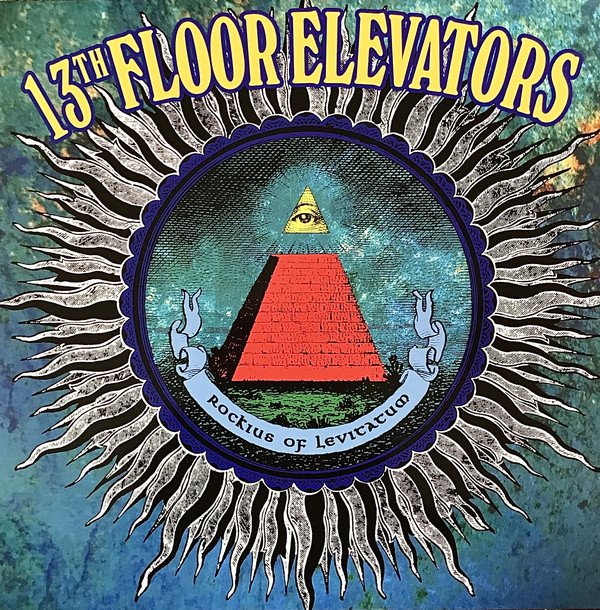
*13th Floor Elevators – Rockius of Levitatum Album Cover Artwork*
The creative chaos of Austin was essential to Erickson’s identity. Alongside counterculture figures like Doug Sahm and promoter Chet Helms, Erickson helped birth a music scene that rejected norms and embraced experimentation.
At the heart of this movement was The 13th Floor Elevators, whose lineup included jug player and LSD advocate Tommy Hall. Their album The Psychedelic Sounds of the 13th Floor Elevators became a cult favorite, especially for the track “Slip Inside This House”, which influenced generations of psych bands from The Jesus and Mary Chain to The Black Angels.
Erickson would later be honored at the Austin Music Awards and cited as a foundational figure in Austin music. His fingerprints are still found in the city’s deep psych-rock roots.
In 1969, Erickson was arrested for the possession of a single joint—a charge that could have led to a long prison sentence. Instead, he made the fateful decision to plead not guilty by reason of insanity. He was declared guilty by reason of insanity and confined to Rusk State Hospital, where he endured electroconvulsive therapy and Thorazine treatments.
During this time, Erickson began behaving erratically, claiming to be a Martian and writing letters in alien languages. He later said he was “possessed,” and songs like “Two Headed Dog” and “If You Have Ghosts” reflect these psychological horrors.
Released in 1981, The Evil One marked Erickson’s return from institutionalization with a new sound—dark, heavy, and horror-themed. Produced by Stu Cook of Creedence Clearwater Revival, the album seamlessly blends psychedelic flourishes with elements of metal and punk.
Songs like “I Think of Demons”, “Night of the Vampire”, and “Creature with the Atom Brain” showcase Erickson’s obsession with the supernatural. But rather than camp, the songs feel genuinely haunted. Fans and artists alike hail The Evil One as a masterpiece, including Billy Gibbons of ZZ Top and King Coffey of Butthole Surfers.
Without Roky Erickson, albums like Sonic Highways or bands like The Black Angels might not exist.
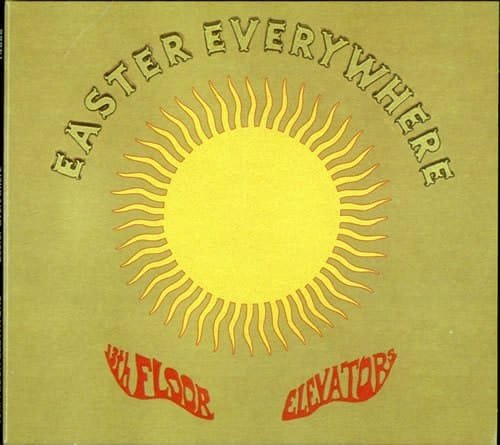
*13th Floor Elevators – Easter Everywhere Album Cover Artwork*
Journalist and producer Bill Bentley became one of Roky Erickson’s greatest champions. In 1990, Bentley organized the tribute album Where the Pyramid Meets the Eye, featuring artists like ZZ Top, R.E.M., Butthole Surfers, and Jesus and Mary Chain covering Erickson’s work.
This tribute reignited interest in Erickson’s music and legacy. Years later, Bentley helped coordinate Erickson’s 2010 collaboration with the Austin-based band Okkervil River. The resulting album, True Love Cast Out All Evil, utilized archival vocal tracks and new arrangements to craft a moving and redemptive body of work. Songs like “Goodbye Sweet Dreams” and “Please, Judge” reflect a man who survived the worst and still had something to say.
The 1966 single “You’re Gonna Miss Me” is arguably Erickson’s most famous song. With its driving rhythm, howling vocals, and jug-driven bassline, it encapsulated the raw power of psychedelic garage rock.
Even decades later, the song remains a blueprint for psych and indie rock bands. It was featured in the cult film High Fidelity and referenced by artists ranging from R.E.M. to Foo Fighters. Without Roky Erickson, the fuzzed-out, emotionally charged psych revival of the 2000s might never have happened.
In the 2000s, Jegar Erickson (his son) and Sumner Erickson (his brother) assisted in managing Erickson’s career and care. Jegar, a musician himself, frequently performed with his father and played a key role in helping him return to the stage.
Documentaries like You’re Gonna Miss Me shed light on Erickson’s difficult home life, including his mother Evelyn Erickson’s controversial role in limiting his treatment. Eventually, his family stabilized his support network, and Roky Erickson began touring again to standing ovations around the world.
Erickson wrote the playbook for outsider rock long before it was cool. His work directly inspired acts such as the Butthole Surfers, R.E.M., and the Jesus and Mary Chain. His songs have been covered by Ghost, Tunde Adebimpe, and even Jack White.
His themes of madness, religion, alienation, and redemption predated many of the concepts later explored in alternative music. Whether you heard “Starry Eyes” on a mixtape or “Shake Me Lucifer” in a horror film, Roky Erickson’s music cut through with raw honesty and originality.
Roky Erickson experienced a resurgence in the 2010s, performing at Austin City Limits, being celebrated at the Austin Music Awards, and receiving coverage in notable outlets such as Rolling Stone and NPR. He released True Love Cast Out All Evil to critical acclaim and made emotional appearances at SXSW and European festivals.
He died on May 31, 2019, at the age of 71. Tributes poured in from all corners of the music world. Dave Grohl, Billy Gibbons, and countless others shared how deeply Roky had impacted their lives and art. As the Austin Chronicle noted, the “circle remains unbroken”—his influence would live on.
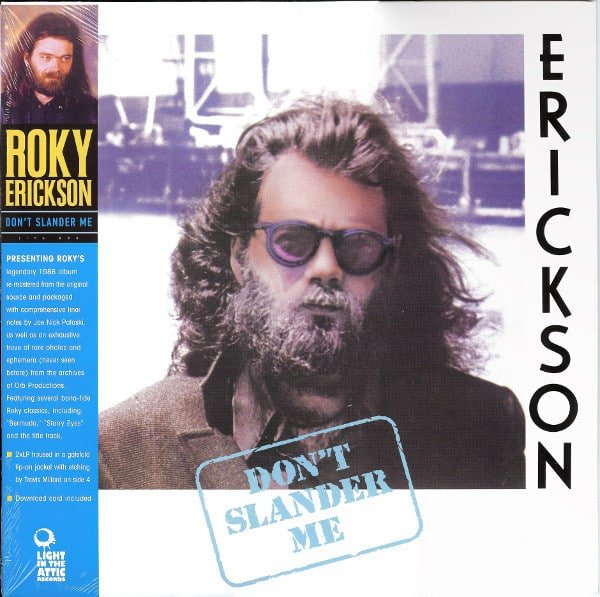
*Roky Erickson – Don’t Slander Me Album Cover Artwork*
Roky Erickson was a man of paradoxes—visionary yet haunted, celebrated yet institutionalized, a rock icon whose most powerful years were stolen by the system. His story forces us to consider how society treats its creatives, especially those dealing with mental illness.
He showed us that redemption is possible. That the mind, even when fractured, can still create beauty. And that the purest voices sometimes scream from the edge.
5. What album should I start with?
Start with The Psychedelic Sounds of the 13th Floor Elevators, then listen to The Evil One and True Love Cast Out All Evil for a full view of Erickson’s evolution.