When you prepare to sell used vinyl records to a local record store, it is helpful to understand that shops primarily look for inventory they can resell quickly at a profit. Buyers prioritize condition, current market demand, and realistic resale value above all else.
To make a successful sale when selling your record collection, it is important to know how shops evaluate potential inventory. They balance three main factors: demand, condition, and margin.
Stores favor artists, genres, and titles that have a proven track record of selling well locally. High-demand genres often include classic rock, key jazz titles, popular pop and hip-hop, metal, punk, and current indie releases. Conversely, stores usually pass on or price very low large quantities of easy-to-find easy listening, show tunes, or beat-up common titles.
Condition comes first. Even a highly desirable title loses most of its value if the vinyl or jacket is heavily worn. Issues such as warping, mold, or water damage can make a record unsellable.
When determining an offer, many shops aim to pay roughly 30–40% of the expected cash resale price. If the item is very desirable or if you are a regular customer, stores may offer up to 50% in store credit.
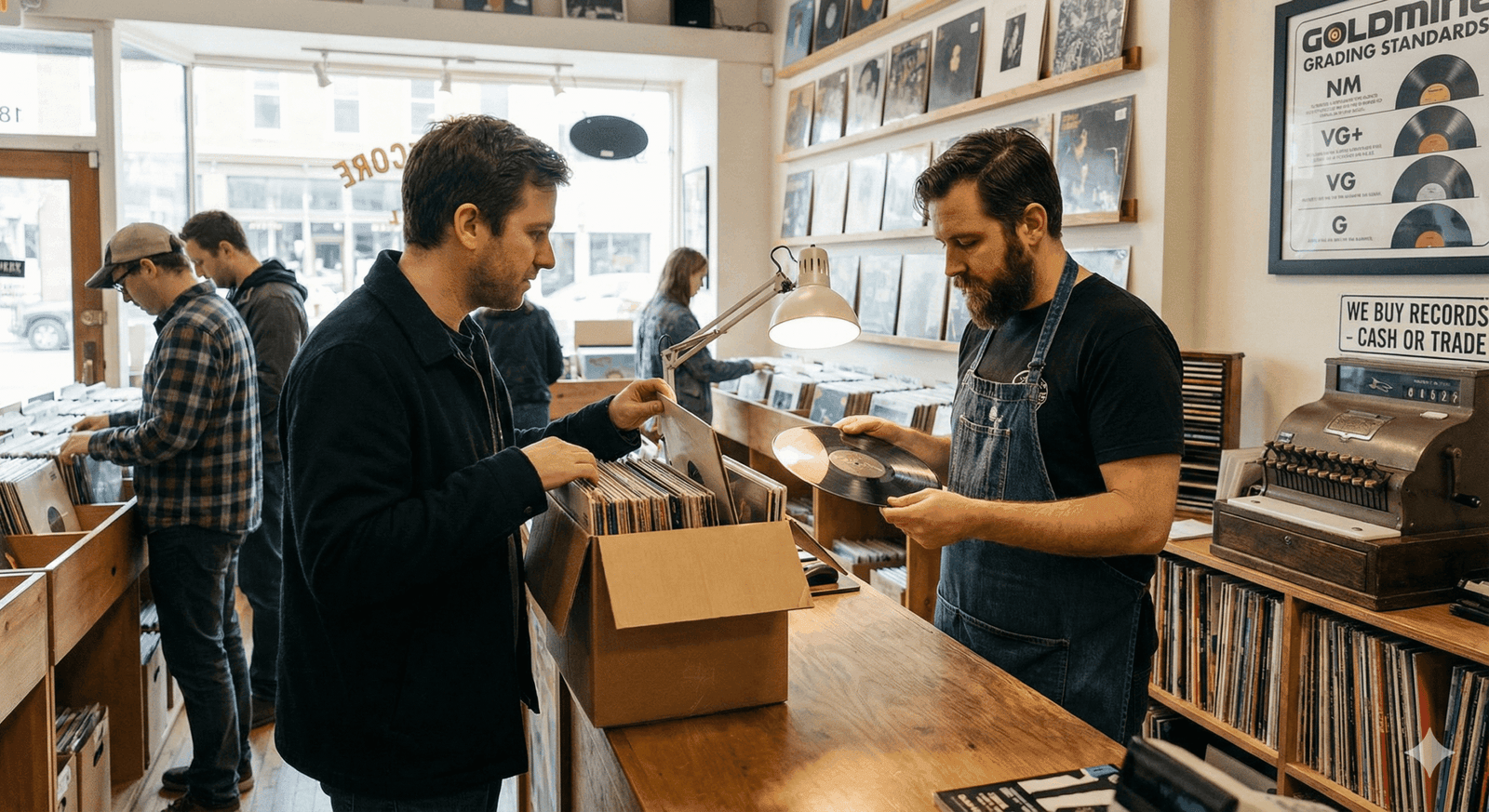
Stores usually evaluate collections based on standard grading systems, such as the Goldmine or Discogs style. When selling vinyl to record stores, they tend to pay the best prices for copies that are graded VG+ (Very Good Plus) and above.
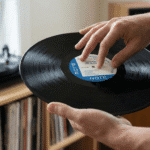
Buyers check for gloss and “sheen” to determine quality. They look for light versus deep scratches, scuffs, groove wear, and warping by holding the record under a light, level with the eye. While light hairline marks are often acceptable, deep or feelable scratches, heavy noise, or skips typically turn an item into a low-value or no-buy record.
Many stores will spot-check play or rely on experience-based inspection. It is worth noting that quieter genres, such as jazz, classical, and acoustic music, are held to stricter noise standards than louder genres like rock or punk.
The condition of the packaging matters. Buyers look for intact seams, minimal ring wear, and the absence of major water damage, mold, or heavy writing. Having the original inner sleeves, posters, or booklets present can raise the amount a store is willing to pay.
Beyond the physical condition, the specific release details significantly impact the value when you sell used vinyl records.
Original pressings, sought-after labels, or limited editions are generally more attractive to buyers than common later reissues or budget label versions.
There is a distinction between rarity and demand. Some records are scarce but simply do not sell. Stores prefer titles with proven buyers over obscure records that might sit in bins for years.
If a shop is low on certain genres—such as 80s metal, punk, or specific jazz labels—they may pay unusually strong percentages to restock those specific bins.
Most stores reference market data, such as Discogs sales history, but they adjust these figures for local demand and risk.
You can improve your experience by preparing your collection before bringing it in.
Generally, no. Deep or feelable scratches, heavy noise, or skips typically make a record a low-value or no-buy item. Light hairline marks or scuffs that do not affect playback are often acceptable, though they lower the value.
Stores must cover overhead, cleaning, and processing costs. They typically pay 30–40% of the expected retail price in cash. The online price often reflects what a seller hopes to get, not the wholesale buy price.