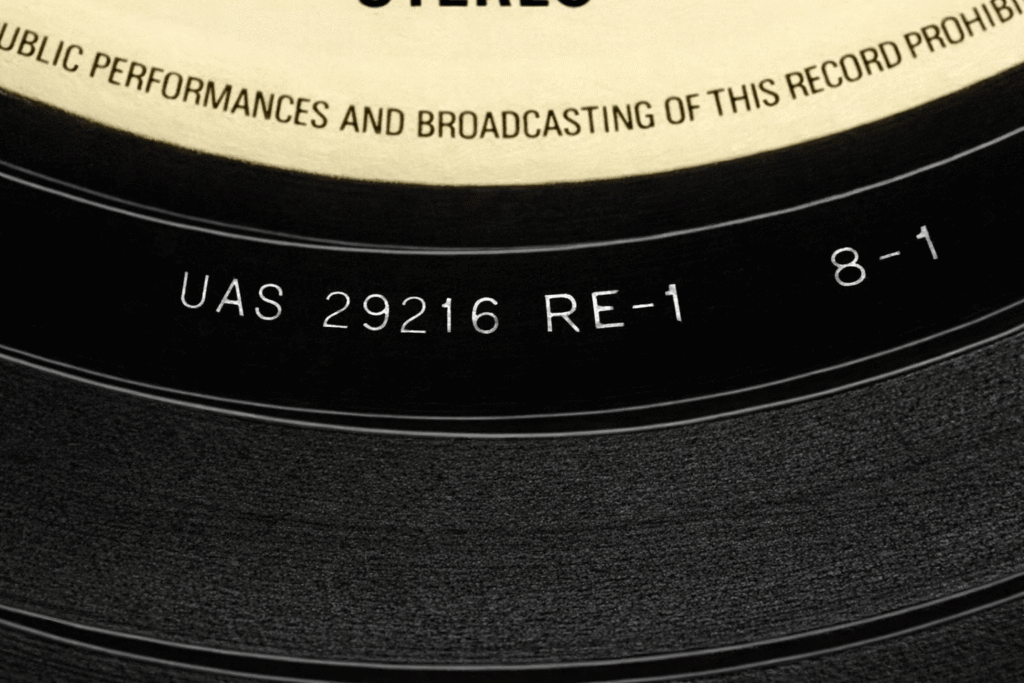
How to identify vinyl pressings means using dead wax (runout groove) details—especially matrix numbers—to determine which manufacturing run a record comes from and whether it is an early or first pressing. These methods allow collectors to identify the exact version of a vinyl record they own, rather than relying on assumptions based on the sleeve.
Identifying pressings is critical because different versions of the same album can vary significantly in market value, sound quality, scarcity, and historical relevance.
The most reliable identification data lives on the record itself, not the sleeve. Before identifying a pressing, it is essential to understand the terminology collectors use.
The dead wax, also known as the runout groove, is the smooth area between the final music groove and the record label. This area contains information etched or stamped during lacquer cutting and manufacturing.
Dead wax contains primary source data that is far more reliable than barcodes, copyright dates, hype stickers, or sleeve printing. Collectors and grading professionals rely on dead wax because it reflects how and where the record was physically made.
Collector rule: dead wax always overrides the sleeve.
A matrix number is an alphanumeric code engraved in the dead wax that identifies the lacquer cut and production details. These codes help identify:
There is no universal matrix system—conventions vary by label, country, and era—but common example formats include:
ST-A-712285-1AK 42123 A1MS-2025-B-REMatrix numbers provide clues about pressing generation, mastering history, and production lineage. While patterns exist, they should always be treated as indicators—not absolute rules.
A1, -1, 1A)
A1 / B1A//1 – B//11A / 1BAlways verify both sides—Side A and Side B may come from different cuts.
Many pressing plants included letters, symbols, or logos in the dead wax to indicate the manufacturing location. These marks help confirm the country and plant when cross-checked with reference databases.
Common examples include:
P, PR, MO, SP (Atlantic-family plants, era-specific)Plant marks are most useful when combined with matrix numbers—not when viewed in isolation.
Initials or stamps in the dead wax may identify the mastering studio or engineer who cut the lacquer. These marks sometimes correlate with sound quality and collector demand.
Examples include:
STERLINGMASTERDISKRLBGKGThese marks indicate who cut the record, not when it was pressed—but they are valuable context clues.
A frequent collector mistake is assuming an original sleeve equals an original pressing. In reality:
The dead wax always takes priority over the sleeve.
While dead wax is the primary identifier, additional details can help narrow down the pressing era:
These clues support identification but should not override matrix data.
Write down every etched or stamped character from both sides of the record exactly as they appear.
Compare label logos, catalog numbers, and text placement with known variations for that release.
Search and compare your exact runout codes against verified listings in databases such as Discogs. Small differences often indicate different pressings.
Confirm low cut markers (A1, B1, 1A) and any known first-press traits specific to the label or release.
Understanding how to identify vinyl pressings allows collectors to accurately determine what they own. A first pressing comes from the earliest production run using the original lacquers—but first does not always mean best sounding or most valuable. In some cases, later cuts outperform early pressings sonically.
By mastering these identification skills, collectors avoid common traps such as matching by title and year alone and gain confidence in assessing vinyl record value, authenticity, and historical context.