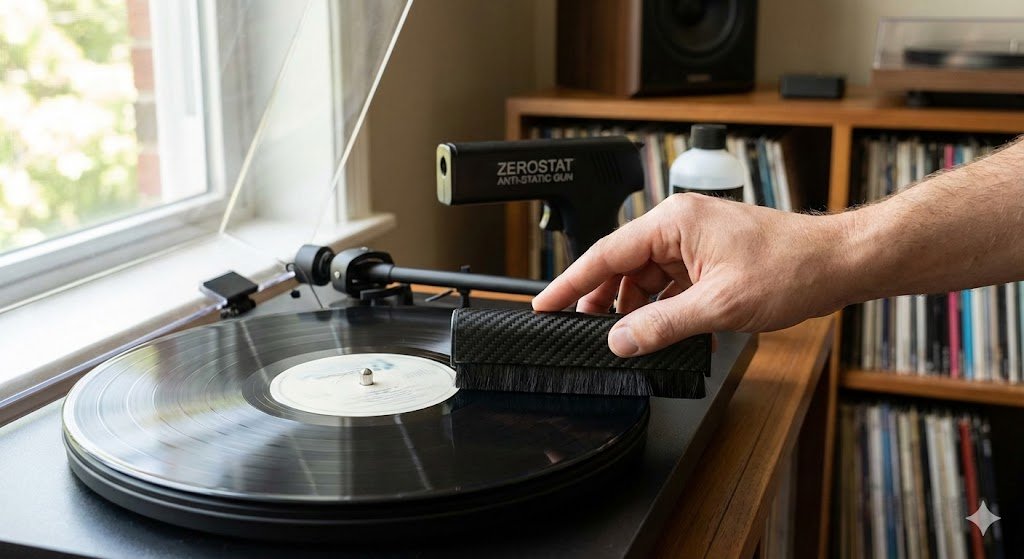
Learning how to remove static from vinyl records is essential if you want to enjoy the warm sound of vinyl without the loud pops and crackles of static electricity interrupting your favorite track.
Static is the invisible enemy of high‑fidelity sound. Not only does it cause audible noise, but it also acts like a magnet, pulling dust and debris deep into your record grooves.
If your records are clinging to their sleeves or crackling during playback, don’t worry. Here is everything you need to know about why static happens and how to fix it for good.
Before you can fix the problem, it helps to understand the basics. Vinyl is an insulator, meaning it holds onto electrical charges rather than letting them flow away. Static builds up when your record rubs against other materials—like paper sleeves, felt mats, or even dry air.
This friction creates an electrical imbalance. When the charge suddenly discharges during playback, you hear a “pop.” That same charge attracts dust particles from the air, locking them into the grooves where your stylus will hit them.
Common Culprits:
A good carbon fiber brush is the first line of defense, but most people misuse it.
The goal is not to scrub the record; it is to discharge it. Gently hold the brush over the spinning record and, crucially, touch the metal part of the brush handle with your hand. This completes a grounding path, allowing static to flow from the record, through the conductive bristles, and safely through you.
If a dry brush is not working, lightly mist your cleaning brush with distilled water (never tap water). You want it barely damp, not wet. Run it over the record so it dries within a few rotations. The slight moisture immediately cuts static charge while picking up surface dust.
For serious collectors in arid climates, a device like the Milty Zerostat 3 is a heavy‑duty option. It releases positive and negative ions onto the record surface to neutralize the charge without touching the vinyl. It is expensive, but highly effective when used correctly.
Brushes are excellent for maintenance, but they cannot always remove static that is “baked in” along with deep grime. To hit the reset button, you need to wet clean.
Once the static is gone, keep it from coming back. Throw away the plain white paper sleeves that came with the record and replace them with poly‑lined anti‑static inner sleeves (like MoFi or from Sleeve City). These reduce friction and help prevent the record from recharging every time you put it away.