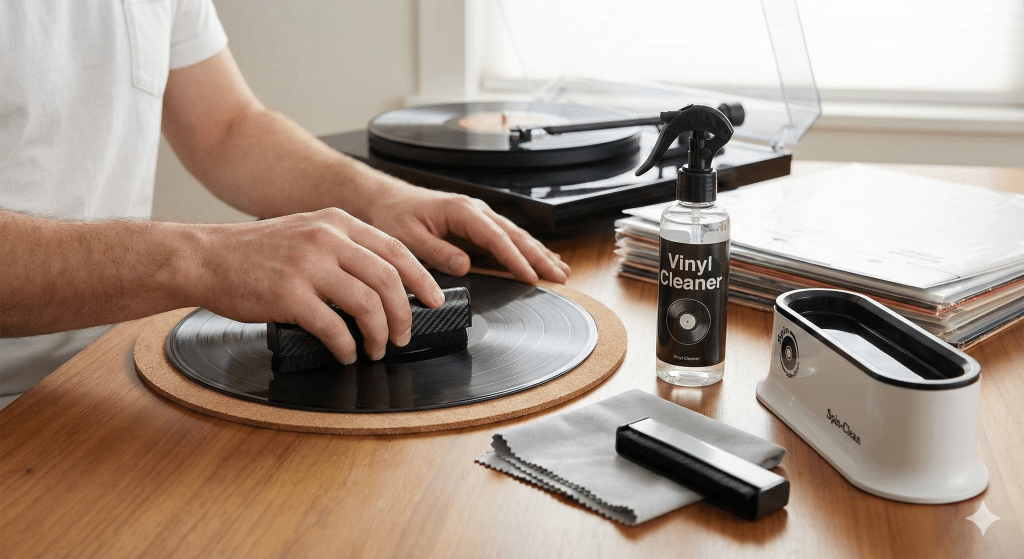
Cleaning vinyl records isn’t about making them look shiny — it’s about protecting the grooves that hold the music. Using the wrong cleaning method can permanently damage a record, increase surface noise, or accelerate stylus wear. This guide is written for collectors and serious listeners who want to clean vinyl records safely, improve sound quality, and preserve their collection for the long term.
When a stylus tracks a record, it follows a groove narrower than a human hair. Any dust, grit, or oil left behind doesn’t just cause pops and crackles — it can be pressed deeper into the groove wall, creating permanent wear. Fingerprints are especially harmful. Oils from your skin attract dust and form a sticky residue that standard dry brushing cannot remove.
The goal of proper vinyl cleaning is simple: remove contaminants without stressing the vinyl surface. That means avoiding harsh chemicals, abrasive materials, and popular “hacks” that circulate online. Safe cleaning relies on controlled moisture, gentle contact, and materials designed specifically for vinyl playback.
By establishing a consistent, safe cleaning routine, you achieve two important outcomes:
Immediate sound improvement. Removing static, surface dust, and oils reduces background noise and restores clarity, detail, and dynamics.
Long-term record and stylus preservation. Clean records reduce friction inside the groove, extending stylus life and preventing irreversible groove wear that no amount of cleaning can fix later.
Before discussing brushes, fluids, or machines, it’s important to understand that prevention matters as much as cleaning. Most contamination happens during handling and storage. The safer your habits, the less aggressive your cleaning methods need to be.
This guide walks through vinyl cleaning in progressive levels — from daily dry maintenance to deeper wet cleaning and advanced systems used by serious collectors. Each method is explained with clear do-and-don’t guidance so you can choose the safest option for your records, whether you’re maintaining new pressings or restoring used finds.
Before we discuss fluids and brushes, we must address the most common source of contamination: you. The best way to keep a record clean is to prevent it from getting dirty in the first place.
Never touch the playing surface (the grooves). The oils on your fingertips are acidic and sticky. Always grip the record by its outer edges, or place one finger on the label and the thumb on the edge.
When removing a record from its sleeve, do not pinch the record and the sleeve together. Bow the sleeve open to reduce friction and static as you slide the record out.
Never leave a record on the turntable platter after the music stops. Dust settles quickly. As soon as the side is finished, please put it back in its sleeve.
The internet is full of “hacks” for cleaning vinyl, many of which are disastrously harmful. Vinyl is a plastic (PVC), but it is chemically sensitive.
Every time you play a record—without exception—you should perform a dry clean. This takes ten seconds and saves you hours of deep cleaning later.
Note: A carbon fiber brush is for maintenance. It removes loose dust, but it cannot clean grime, fingerprints, or stuck-on debris. For that, you need a wet clean.
If you bought a used record from a thrift store, or if your dry brush isn’t removing the pops and clicks, it is time for a wet clean. This method involves applying a fluid to dissolve oils and lift dirt.
1. Inspect the Surface. Hold the record under a bright light. Look for fingerprints, smudges, or food debris. Identify the problem areas.
2. Prepare the Workspace: Lay down a soft, clean towel or a specialized rubber cleaning mat. Place the record on top. Tip: Do not clean the record on your turntable unless you have a steady hand; you risk damaging the turntable motor or bearing with excess fluid.
3. Apply the Solution Lightly mist your cleaning solution onto the record surface. Crucial: Avoid the center label! If the paper label gets wet, it can bubble, peel, or discolor. If you are using a spray bottle, it is often safer to spray the cloth rather than the record.
4. The Wipe: Take your cleaning cloth and gently wipe the record. Follow the grooves’ direction (concentric circles).
5. The Rinse (Optional but Recommended) If your cleaning solution is heavy on surfactants (soaps), you need to rinse. Spray a separate cloth with pure distilled water and wipe the record again to remove any cleaning residue.
6. The Dry Take your second, dry microfiber cloth. Gently wipe in circles to absorb the moisture. Once visibly dry, place the record in a drying rack (a dish rack works if it has soft tines) for 15–30 minutes to ensure all moisture has evaporated from the deep grooves.
For collectors with large libraries (500+ records) or those hunting for “crate digging” bargains that are covered in decades of grime, manual wiping isn’t enough. You need mechanical assistance.
This is the most popular mid-tier solution. Devices like the Spin-Clean or Knosti Disco-Antistat use a narrow basin filled with distilled water and cleaning fluid.
Machines like the Record Doctor or VPI apply fluid to the record, scrub it, and then use a powerful vacuum motor to suck the dirty fluid completely off the surface.
The gold standard. These machines submerge the record in a water bath and use high-frequency sound waves to create microscopic bubbles (cavitation). These bubbles implode against the vinyl surface, blasting dirt from the deepest parts of the groove without physical contact. It is the safest and most thorough method, but also the most expensive.
You can spend hours scrubbing your vinyl, but if your stylus (needle) is dirty, it’s all for nothing. As the stylus travels through the groove, it picks up the gunk you missed. That gunk hardens on the needle tip, muffling the sound and distorting high frequencies.
Once you have successfully learned how to clean vinyl records, you need to keep them that way.
Cleaning vinyl is a balance of chemistry and mechanics. You want to dissolve the oils and lift the dust without using harsh chemicals or abrasive force.
By following these safe practices for cleaning your records, you ensure the music sounds exactly as the artist intended: clear, dynamic, and full of life. Start with a good carbon-fiber brush, invest in some distilled water and microfiber cloths, and treat every record with the respect it deserves.